By
AgilePoint
March 23, 2026
•
9
min read


.png)
Procurement teams are under pressure to move faster, control spend, and reduce risk. Automation is no longer optional. It’s how sourcing stays competitive.
Robotic process automation in procurement refers to using software bots to handle structured, rule-based tasks that once required hours of manual effort. These bots mimic human actions inside systems, moving data between ERP, finance, and procurement platforms without fatigue or distraction.
In procurement environments, this means automating invoice processing, purchase order creation, vendor data management, and other repetitive tasks that slow teams down.
Instead of replacing people, automation shifts effort away from manual data entry and routine processes toward supplier relationship management and strategic sourcing.
This guide explains where robotic process automation (RPA) works best, what measurable benefits of RPA to expect, how to implement it responsibly, and what governance considerations procurement leaders must address.
The goal is not automation for its own sake. It’s faster sourcing, stronger compliance, and fewer errors across procurement operations.
Mid-size and enterprise procurement teams face the same challenges. Volume increases. Audit scrutiny tightens. ERP environments grow more complex. Maintaining visibility across systems becomes harder.
Labor constraints make it difficult to scale procurement functions without adding headcount. At the same time, regulatory pressure demands complete audit trails and stronger controls.
This is where understanding what is robotic process automation becomes essential. Instead of layering disconnected automation technologies, procurement leaders need orchestration across finance, HR, and supply chain systems.
RPA operates based on predefined logic. It executes rule-based tasks without deviation. RPA operates 24/7, significantly speeding up procurement cycles and reducing turnaround times. That reliability reduces human error and improves operational efficiency, particularly in high-volume environments.
RPA excels in structured procurement tasks. The most successful implementations focus on repetitive, high-volume activities with clearly defined rules.
Vendor onboarding is often slowed by manual data entry, documentation review, and compliance verification. RPA bots can automate supplier data management by collecting tax forms, validating vendor information, verifying compliance documentation, and automatically routing approvals.
Automated vendor data management reduces onboarding time and creates standardized audit trails. It also strengthens data security by limiting human intervention in sensitive records.
The result is faster supplier activation and stronger compliance across procurement activities.
RPA tools can monitor renewal dates, trigger notifications, and track clause compliance using structured contract data. Renewal alerts prevent lapses. Standardized reporting supports audit readiness.
While complex tasks involving the interpretation of unstructured data may require machine learning, RPA ensures routine contract tracking stays consistent and documented.
Purchase order creation often begins with purchase requests that move through multiple approval layers. RPA bots can automatically generate POs from approved requests, validate fields, and route them to suppliers without delay.
In invoice processing, bots handle invoice capture, automate invoice capture validation, and perform two-way or three-way matching between purchase orders, goods receipts, and supplier invoices. Exceptions are flagged immediately for human review.
Automating invoice processing significantly reduces error rates and payment delays and can enhance efficiency across operations.
RPA also supports payment scheduling and vendor communication updates, keeping supply chain workflows predictable.
RPA aggregates procurement data from multiple systems, categorizes spend, and generates dashboards using historical data. Structured reporting enables data-driven decisions without requiring manual spreadsheet consolidation.
McKinsey & Company reports that automation in transactional procurement can reduce processing costs by up to 80 percent in targeted activities (McKinsey, 2017).
"A large basic-materials company found that by deploying bots to scan and code invoices directly into its core enterprise-resource-planning (ERP) system, it could reduce invoice-processing costs by 80 percent."
These measurable benefits allow procurement leaders to focus on strategic value rather than routine tasks.
A mid-sized manufacturing enterprise processing 1,200 new vendors annually struggled with onboarding delays averaging 12 days. After RPA implementation, supplier data management tasks were automated, compliance checks standardized, and documentation collection streamlined.
Onboarding time dropped to four days. Compliance scoring improved during internal audit reviews. Contract approvals accelerated because data was already validated at intake.
Allowing procurement teams to focus on supplier relationships instead of paperwork transformed onboarding from a bottleneck into a controlled workflow.
Most procurement teams can deploy an initial RPA solution within 8 to 12 weeks if the scope is controlled and governance is clear.
Selection comes first. Focus on high-volume manual processes with low decision complexity. Ideal candidates include invoice processing, purchase order creation, and supplier data updates.
Procurement teams should document the current throughput, error rates, and hand-offs for each shortlisted task to build the business case for RPA. That baseline makes it easier to justify RPA adoption with measurable targets.
Preparation requires cleaning procurement data, defining approval hierarchies, and mapping business processes. RPA ensures consistent execution, but it cannot fix broken workflows.
Vendor master records must be accurate. Without clean data, automation simply moves errors faster.
To maximize RPA value, starting with a small pilot project focused on a defined process is highly recommended. Define KPIs before deployment: cycle time, error rate, cost per transaction, and first-pass match rate.
Build process maps, create bot scripts, and test them in a sandbox that mirrors production data during RPA development.
Governance is ongoing. Monitor RPA performance and adjust as needed to align with evolving procurement needs after implementation. Assign ownership for RPA bot maintenance, exception handling, and security oversight. RPA provides a complete digital audit trail, reducing instances of maverick spending.
KPIs to track include:
Scaling without governance creates automation debt. Controlled expansion protects long-term value.
.png)
Poor data quality remains the most common failure point. RPA operates based on defined rules. If supplier data is inconsistent, bots cannot compensate for it.
ERP integration issues can surface if APIs are outdated or security protocols are unclear. Cross-functional sponsorship between procurement, IT, finance, and HR is essential.
Resistance from teams is also common. Procurement professionals may fear displacement. In practice, automation shifts manual tasks toward strategic tasks and supplier relationship management.
Over-automation can reduce oversight. Shadow bots built without IT governance introduce supply chain risks and data security concerns.
As automation strategist Leslie Willcocks of the London School of Economics noted in research on digital labor, successful programs treat bots as managed assets requiring governance, monitoring, and lifecycle oversight (Willcocks, Lacity, and Craig 2015).
RPA implementation requires discipline. It's not a set-it-and-forget-it technology.
If RPA is going to stick, it needs the right conditions. The quickest way to tell is to look at where work piles up, where errors repeat, and where your team is doing the same clicks all day across procurement platforms. Use the questions below as a quick gut check before you invest time in RPA implementation planning.
If the answer to multiple questions is yes, your team may be ready for RPA adoption.
RPA transforms procurement functions by shifting energy from routine tasks to strategic sourcing, supplier relationships, and risk management.
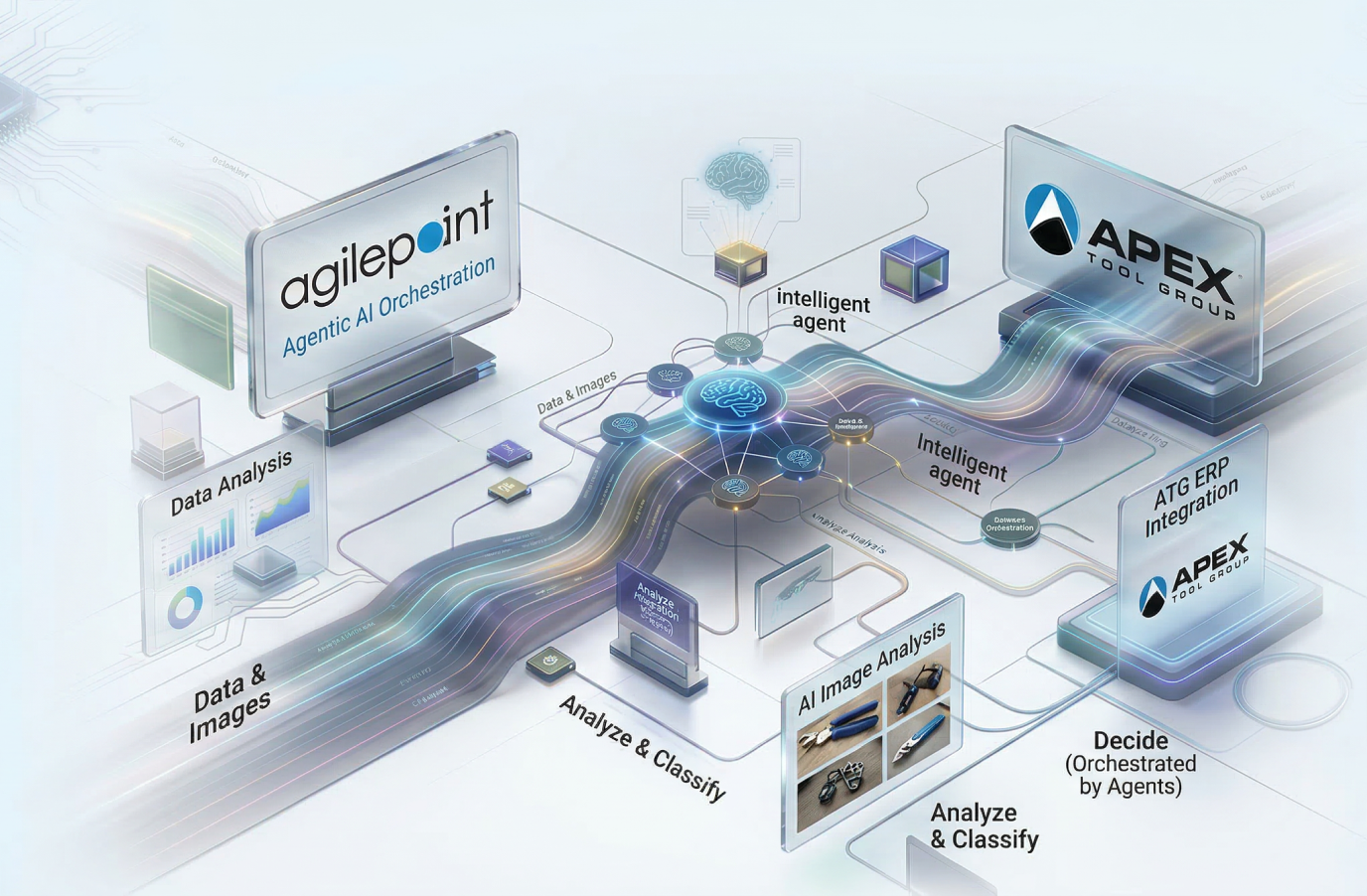
When integrated into a broader enterprise process automation strategy, RPA becomes part of coordinated cross-system orchestration. It works alongside analytics, predictive capabilities, and, in some cases, machine learning for complex tasks involving unstructured data.
AgilePoint provides the foundation for controlled, secure RPA deployment within a scalable automation environment. Rather than layering disconnected tools, procurement leaders can orchestrate workflows across finance, HR, and supply chain systems from a unified platform.
If your procurement team is still managing high-volume manual processes, now is the time to act.
Contact AgilePoint to evaluate your current procurement workflows and design a practical roadmap for automation. Build measurable efficiency gains without disrupting existing systems.
Yes. RPA works well for mid-size organizations with high-volume routine processes. Smaller procurement teams often see faster ROI because automation eliminates manual workload without increasing headcount.
No. RPA doesn't replace professionals. It handles rule-based tasks and repetitive activities and reduces manual processes, but still requires human oversight, strategic decision-making, and supplier relationship management.
Many organizations report measurable RPA benefits within the first year, particularly in invoice processing and purchase order automation, where volume justifies investment.
There is a difference between RPA and AI. RPA handles structured, rules-based work. Agentic AI steps in to analyze bids, flag contract risks, and guide supplier choices. They are complementary, not competing technologies. The combination of RPA and AI delivers transformational results in procurement.
Methodology Disclaimer: This article was developed using a combination of publicly available industry research, analyst reports, academic studies, and established procurement best practices. Supporting data points were sourced from recognized institutions and consulting research to ensure credibility and relevance.
The analysis reflects current trends in procurement automation, operational governance, and RPA implementation models across mid-size and enterprise organizations. Recommendations are based on documented use cases, performance benchmarks, and cross-functional automation frameworks observed in real-world deployments.



.png)



.jpg)



%20(2).webp)


-1280w.avif)