By
AgilePoint
March 17, 2026
•
9
min read



If you’re weighing robotic process automation against machine learning, you’re probably not looking for definitions. You’re trying to decide how to move work off people, reduce operational costs, and avoid locking your organization into something brittle.
This comparison matters because RPA and ML solve very different problems. Used correctly, they complement each other. But, used blindly, they create complexity with very little return.
What is robotic process automation (RPA)? At its core, RPA is about execution. It uses software robots to perform tasks the same way a human would inside a digital environment. That usually means following predefined rules to move data between systems, complete transaction processing, or eliminate mundane tasks like report generation and repetitive data entry.
When a workflow follows the same steps every time, RPA bots can perform the same tasks faster, with minimal human intervention, and with fewer opportunities for human error.
RPA is at its best when the business still runs on a mix of older and newer apps. If a person can do the work by clicking through screens, an RPA bot can usually do it too, even when there is not a clean integration path. That matters in business operations where integration backlogs are real and business leaders still need results.
Where things break down is input. Email threads, PDFs, scans, and free-text notes are messy, and traditional RPA is not built to interpret them. That is where AI systems help. Natural language processing can sort and route requests. Computer vision can pull data out of documents. Then RPA takes over again and finishes the steps.
Machine learning models are built to learn from data rather than follow explicit programming. Instead of being told exactly how to perform tasks, ML algorithms use training data and historical data to recognize patterns and make predictions.
This distinction matters in real operations. Unlike RPA, ML does not guarantee the same output every time. It estimates outcomes based on probability, which is why it can perform complex tasks such as fraud detection, predictive maintenance, customer interactions, and demand forecasting in supply chain management.
ML shows up where intelligent decision-making is required. It supports data analysis across large volumes of information, helps intelligent systems adapt to changing conditions, and improves decisions as more data is collected.
If you’re thinking about ML solutions, the hidden requirement is usually not the model itself. It’s collecting data, cleaning it, and keeping that pipeline stable enough that the model remains useful.
This is where the distinction between RPA and ML becomes practical. RPA executes work by following rules. Machine learning interprets information by learning patterns.
What this table really shows is risk tolerance.
RPA offers predictability. It is strong for rule-based tasks where teams need consistent outcomes, clear audit trails, and fewer errors in routine execution.
Machine learning offers adaptability. It can identify patterns in messy reality, but its explainability can be lower, and its behavior can shift over time. That trade-off is fine in some scenarios and unacceptable in others.
If you are deciding what to deploy first, start by looking at where your business process is deterministic versus probabilistic. That one split usually clarifies everything else.
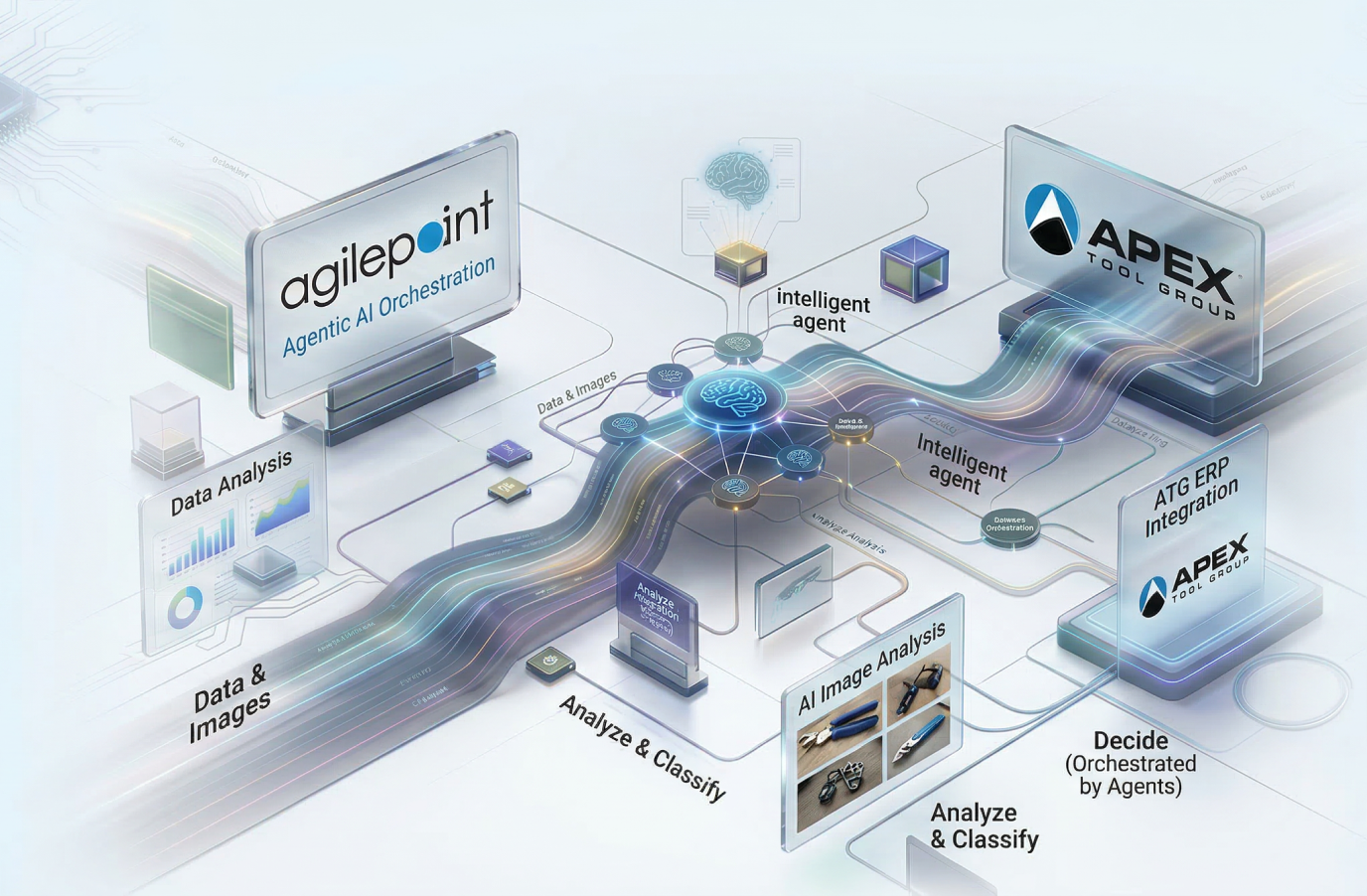
Most automation vendors frame RPA as the execution layer and ML as the intelligence layer. In practice, that means ML handles classification, scoring, or interpretation, while RPA performs tasks across applications once a decision is made.
RPA is the part that moves the work. It clicks through screens, updates records, triggers downstream actions, and keeps systems in sync. It is built for repeatability and control, which is why it fits so well in business operations that depend on stable steps and well-defined rules.
ML is the part that makes sense of inputs, especially when the data is not clean. It is useful for recognizing patterns, ranking risk, extracting information, or routing work to the right place. In other words, ML supports decision-making capabilities, while RPA supports execution at scale.
The detail that often gets missed is ownership. ML introduces uncertainty. Someone has to decide how much autonomy is acceptable, how errors are handled, and where human intervention remains mandatory. RPA, by contrast, is easier to govern because its behavior is deterministic.
What matters more than vendor messaging is how RPA tools behave after deployment. RPA failures tend to be visible and immediate: a broken selector, a missing field, a screen that changed overnight. ML failures are quieter. A model slowly degrades, decisions drift, and outcomes get worse before anyone notices.
Organizations that succeed plan for both failure modes upfront, with monitoring, ownership, and clear escalation paths.
These examples of robotic process automation show how RPA and machine learning are applied in real workflows. The goal isn’t to pick a winner, but to see how each technology handles different parts of the same process once automation moves beyond theory and into day-to-day operations.
Invoices are a classic hybrid use case. ML supports processing unstructured data by extracting fields from PDFs or scans. RPA bots then validate values against predefined rules, post transactions, and create audit trails. Humans only step in when exceptions occur.
This is a good example of automation tools working together: ML handles data extraction, RPA handles the transaction processing, and humans stay focused on the handful of cases that truly need judgment.
ML solutions help classify incoming requests using natural language processing and recognize intent. RPA handles downstream updates, ticket creation, and follow-up tasks.
This division reduces manual tasks without removing accountability from human employees. It also reduces repeat work and improves customer interactions, especially when support teams are moving between multiple systems.
ML algorithms analyze behavior and historical data to detect anomalies. RPA automates the response, gathering evidence, opening cases, and triggering workflows.
One identifies risk. The other operationalizes the response. When it is done well, it reduces human effort while improving consistency in the response process.

If you want the benefits of robotic process automation, start with stable, rule-based tasks that run on structured data across existing systems. That’s where RPA can take routine steps off people and cut human error in data entry.
Use machine learning when inputs vary and the outcome depends on recognizing patterns, like classification, scoring, or predictions that improve with training data and ongoing monitoring.
Combine them when ML interprets messy inputs and RPA executes the workflow, with humans staying involved where approvals, risk, or compliance require it.
Automation failures are rarely technical. They’re organizational.
RPA can magnify a broken process. ML can hide bad data behind impressive accuracy metrics. Both require governance, ownership, and clarity around human behavior.
The common failure point is ignoring how humans interact with automation. Systems that assume zero human oversight tend to break trust quickly.
Another overlooked factor is accountability. With RPA, it’s usually clear who owns a bot and what it does. With ML, responsibility can blur across data teams, platform owners, and business users. When a model influences outcomes, teams need to agree on thresholds, override rules, and escalation paths before automation goes live. Without that clarity, organizations either over-trust ML or under-use it, and both outcomes stall progress.
Mature teams treat automation like any other production system. They version changes, test updates, document assumptions, and expect ongoing maintenance. That mindset shift is often harder than deploying the technology itself.
This is why many organizations start with RPA solutions to remove obvious inefficiencies, then layer in ML where the value justifies the complexity.
RPA is often faster to stand up because you can map a repeatable workflow and deploy quickly. ML usually requires a longer runway because the model’s quality depends on data readiness, ongoing monitoring, and the ability to retrain when market trends, inputs, or behaviors shift.
Automation projects don’t stall because the tool is wrong. They stall because the workflow wasn’t clear, exceptions weren’t owned, and the business process changed faster than the automation did.
AgilePoint helps teams get specific about the work first: what steps are rule-based tasks, what steps depend on judgment, and where data is too messy to treat as structured. From there, it’s easier to decide what belongs in RPA, what belongs in machine learning, and what should remain human-led.
The real question is how work flows through your organization. RPA excels at automating repetitive execution. Machine learning supports interpretation and learning. Together, they reduce human effort where it adds little value and preserve human judgment where it matters.
If you’re ready to move beyond pilots and make automation work in production, contact AgilePoint. Bring one workflow that is consuming time, creating errors, or driving cost. We’ll help you decide what to automate, where ML belongs, where it doesn’t, and how to roll it out in a way your teams can actually run month after month.



-p-500.avif)

-p-500.avif)





%20(2).webp)


%2B(3)-1280w.avif)