-p-500.avif)
What are Enterprise Applications?
Enterprise applications are large-scale software systems that support finance, operations, HR, sales, and customer management. They connect data, automate workflows, and align teams on shared goals. In an interconnected environment, these platforms act as the backbone, linking departments and tools into one coherent structure.
The result is consistency, scalability, and visibility across the organization. By reducing manual effort and repetitive tasks, they free people to focus on higher value work and help leaders act on accurate information in real time.
Why Enterprise Applications Matter for Today’s Businesses
Modern enterprises rely on agility, speed, and accuracy to stay competitive. Enterprise applications, artificial intelligence, and software tools make this possible by removing silos and bringing critical data together. They give leaders access to real-time insights and ensure every team works from the same source of truth.
This leads to faster collaboration, fewer errors, and smarter decisions across departments. Ultimately, these applications create a digital foundation that allows organizations to respond quickly to customer needs, regulatory changes, and shifting market conditions.
Gartner’s Vision for the Future of Enterprise Applications
At the Gartner Application Innovation and Business Solutions (AIBS) Summit 2024, Las Vegas, one of this year's main themes is the future of enterprise applications, which consists of four facets according to Gartner.
Gartner’s vision focuses on enabling flexibility and intelligence through four key elements—composable architecture, autonomous orchestration, embedded intelligence, and adaptive experience. Together, these dimensions are reshaping how businesses design, deploy, and evolve software to meet fast-changing needs without rebuilding their core every few years.
1) Composable architecture
Composable architecture allows enterprises to combine independent software components like building blocks. This modularity means organizations can scale or modify applications without disrupting existing systems. Instead of replacing entire platforms, teams can simply add, remove, or update parts as needed, creating a sustainable approach that balances innovation with operational stability.
2) Autonomous orchestration
Autonomous orchestration coordinates applications, data flows, and business rules without manual handoffs. It reduces errors and latency while keeping systems in sync. As routine actions self-manage, teams recover time for higher value work. The result is faster responses, steadier operations, and resilience when market shifts or incidents demand immediate adaptation.
3) Embedded intelligence (e.g. AI)
Embedded intelligence integrates AI directly within enterprise applications, turning raw data into actionable decisions. It powers predictive analytics, automates repetitive work, and personalizes user interactions. When built into everyday workflows, embedded AI enhances system performance while allowing businesses to continuously learn and adapt from real-world data. These built-in AI capabilities allow teams to predict outcomes, improve accuracy, and personalize workflows at scale.
4) Adaptive experience.
Adaptive experience ensures the enterprise software responds to your context, like user role, device, or environment, automatically. This adaptable experience helps streamline usability and supports dynamic workforces. Whether employees are in the field or remote, adaptive systems maintain a consistent experience that keeps productivity and engagement high across devices and platforms.
Moving Beyond “Build vs. Buy” to “Buy, Build & Blend
With the future of enterprise applications in mind, Denis Torii, VP Analyst Gartner, portrayed the paradigm shift from the traditional Built vs. Buy dilemma in buying a software solution to the new Buy, Build, Blend trend in his session titled “Buy vs. Build in the New (Cloudy) Business Application Era.
As shown in one of the diagrams shared by Denis Torii, the composable architecture underpins this new trend. This aligns with the perspective we frequently share with our customers about the best practices for implementing and managing systems of records and systems of engagement.
This evolution recognizes that modern enterprises need more than a single strategy. Buy, Build, Blend gives organizations room to innovate while preserving stability. It combines the reliability of proven software with the flexibility of custom components that reflect changing needs.
Instead of replacing what works, it adds adaptability so teams can extend existing systems with less risk. IT can modernize at the edge, integrate new capabilities, and retire only what no longer fits, avoiding unnecessary complexity, cost, and disruption overall.
AgilePoint’s Perspective on Buy, Build & Blend
Building on Gartner’s vision, AgilePoint applies the Buy, Build, Blend approach through a composable model that separates stability from agility. The idea is simple: keep what works, evolve what must.
Our platform is designed to let organizations buy standardized systems for predictable tasks while building and blending unique layers where innovation happens. This balance ensures that enterprise ecosystems stay adaptable, integrated, and aligned with real-world business change — without losing control or overcomplicating existing infrastructure.
This flexibility extends across industries, from manufacturing and logistics to e-commerce blends that connect storefronts with backend operations in real time.
a) Commodity Core layer [Buy]
At AgilePoint, we refer to the system-of-records layer, such as ERP, CRM, HR, etc. Usually, this layer houses the functionality common to most organizations. The best practice is to keep the system of records as ‘clean’ and as native as possible. Avoid customizing the system of records such as implementing your unique requirements. e.g. business orchestrations (system of engagements) directly in the system of records.
b) Add-on layer [Build and Blend]
At AgilePoint, we refer to the system-of-engagement layer that captures the business logic, collaborations among teams and cross-functionally, workflows, and end-to-end business process orchestrations that are unique to your organization and could change frequently.
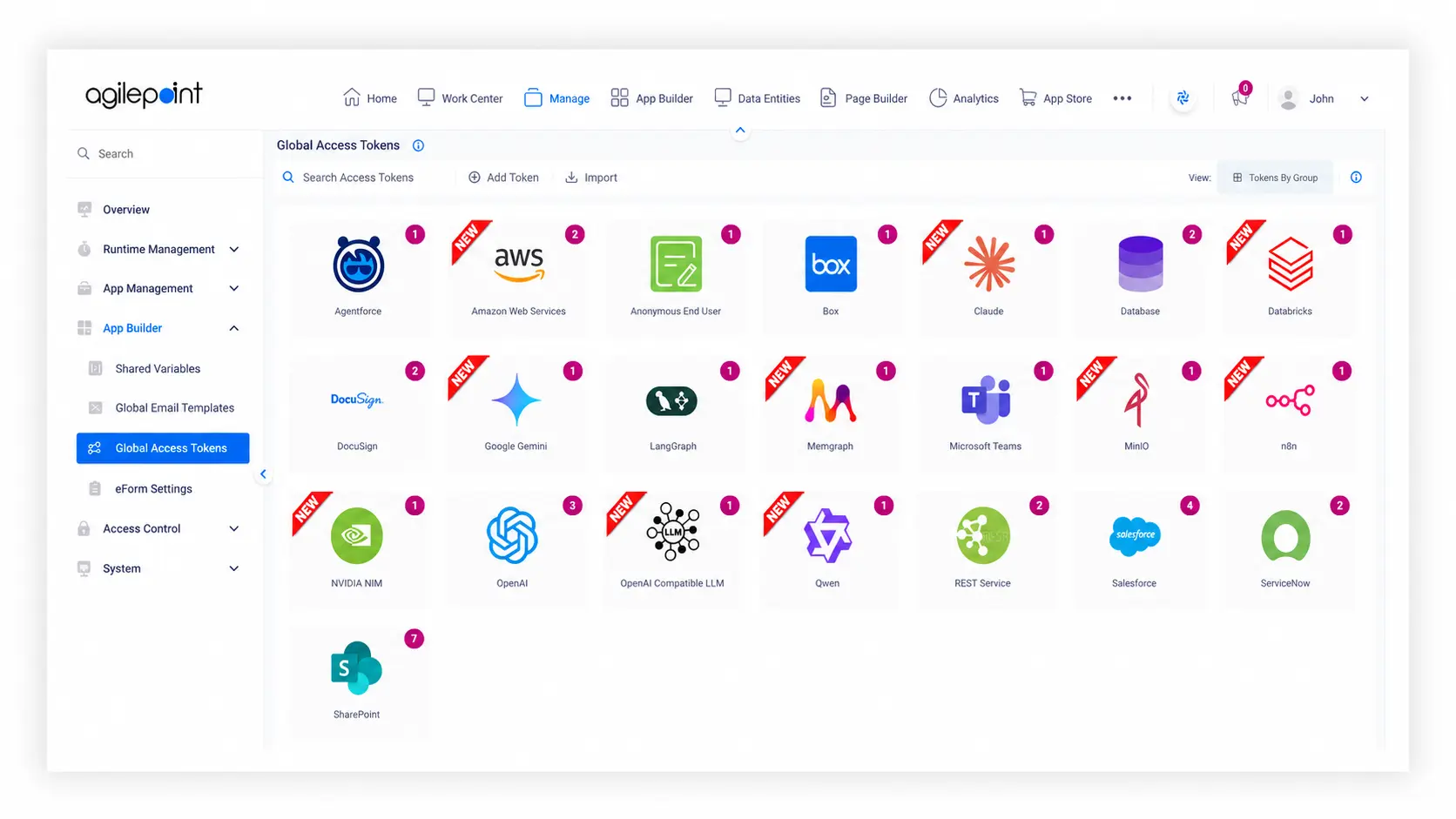
AgilePoint’s abstraction-enabled composable platform enables rapid composition of future-proof and AI-ready ‘system of engagements’ in the form of adaptive end-to-end business orchestrations across 100+ most popular systems of records and platforms, including task management.
Final Thoughts
The Buy, Build, Blend strategy reflects how enterprise software is maturing, moving toward tiered, cross-platform composability. Organizations no longer need to choose between control and convenience.
With platforms like AgilePoint, they can integrate intelligence, automation, and adaptability across every layer of the enterprise. The result is orchestration that spans systems and teams, governed yet flexible.
It points to a future where tools interoperate smoothly, changes roll out and technology becomes a foundation for growth rather than a source of disruption.
In my view, this new Buy, Build, Blend trend raises the discussion of composable architecture to cross-platform and tiered composability. Very intriguing!
.png)
.png)