Understanding the Difference: Software Factory vs AI Factory
The evolution from a traditional software factory to an AI factory marks a fundamental shift in how digital systems are built and scaled. A software factory focuses on speed, standardization, and quality through automation and reusable components.
In contrast, an AI factory emphasizes adaptability, intelligence, and probabilistic learning. While one builds predictable applications, the other learns and evolves. This difference demands a new mindset, where data, governance, and continuous learning play central roles in shaping digital ecosystems for real-time, insight-driven outcomes.
Benefits of Transitioning to an AI Factory
Shifting from a software factory to an AI factory delivers more than technical upgrades; it changes how value is created. The shift applies data-driven intelligence across business layers to improve decisions, automation, and customer experience.
Innovation cycles shorten, personalization deepens, and predictive operations cut waste and downtime. With the right software factory partner, organizations reuse existing assets while unlocking new capabilities.
The outcome is a hybrid environment where deterministic systems coexist with intelligent, self-learning platforms that evolve through feedback. Teams gain speed, governance, and resilience without abandoning proven systems, so improvements land faster and benefits compound across products and services.
AgilePoint’s Role in Enabling the Transition
AgilePoint bridges deterministic and probabilistic systems through its abstraction-enabled composable AI platform. Functioning as an agile software factory, it enables enterprises to reuse and extend existing applications while embedding AI-driven logic directly into workflows.
The AgilePoint platform supports structured automation and adaptive orchestration, forming a unified ecosystem fully prepared for GenAI adoption. By modeling rather than coding, AgilePoint allows faster, scalable delivery of future-ready enterprise solutions.
This combination of structure and innovation empowers organizations to operationalize artificial intelligence effectively, maintaining governance and stability while adapting to new business demands, integrating intelligence seamlessly, enhancing productivity, and accelerating sustainable digital transformation worldwide.
Step-by-Step Transition Strategy
Transitioning from a software factory to an AI factory requires a deliberate, phased plan. Each stage builds on existing strengths while introducing new probabilistic and intelligent capabilities.
This approach helps organizations modernize safely, maintain operational continuity, and ensure that innovation happens in controlled, measurable steps supported by strong governance and business alignment.
Step 1 – Assess Current Software Factory Capabilities
Start by auditing existing processes, automation tools, and data models to find candidates for probabilistic, GenAI-ready components. Evaluate compliance, data governance, integrations, and technical debt. Map handoffs, data quality, and latency. Within your software factory as a service model, document gaps and readiness to establish a foundation for adaptive learning.
Step 2 – Define AI Use Cases
Identify where AI creates measurable value — predictive maintenance, intelligent workflows, or conversational automation. Define clear goals to guide how your AI software factory integrates insights, models, and data flows. Align your priorities with feasibility, ensuring AI improves accuracy, speed, and decision-making instead of adding layers of complexity or unnecessary cost.
Step 3 – Build a Probabilistic-Ready Infrastructure
Build an environment capable of managing probabilistic data, with real-time learning, and dynamic decision-making. Upgrade traditional systems into an agile solution factory that supports iterative testing, model retraining, and continuous integration cycles. Emphasize scalability, security, governance, and interoperability to ensure seamless coexistence between deterministic architectures and adaptive, AI-driven enterprise systems.
Step 4 – Integrate AI and Automation Systems
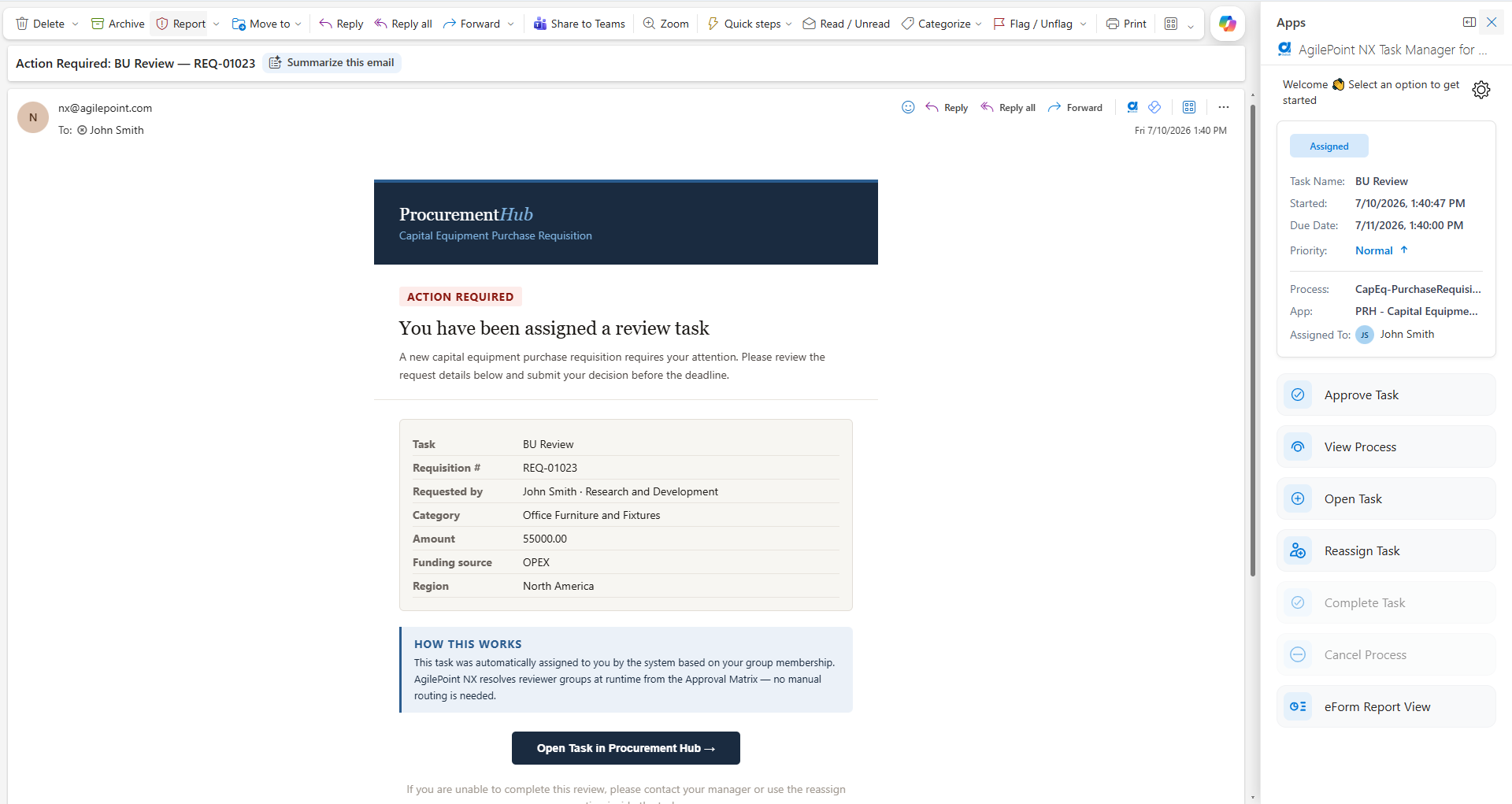
Combine automation frameworks, orchestration engines, and AI pipelines into a unified operational ecosystem. AgilePoint’s conversational factory software model enables this by embedding intelligence directly into workflows and business processes. The integration transforms isolated automation tools into responsive, context-aware systems capable of reasoning, adapting, self-correcting, and continuously improving without losing control or auditability.
Step 5 – Scale and Govern
After initial deployment, expand AI adoption across departments through transparent governance models. Platforms such as AgilePoint simplify oversight by centralizing the data flow, audit trails, and permissions. With this structure, enterprises can confidently evolve from pilot AI projects to enterprise-scale, innovative software factory ecosystems built for long-term sustainability and compliance.
Following these steps establishes a sustainable AI foundation. By combining automation, data modeling, and adaptive orchestration, enterprises create ecosystems that continuously learn and evolve. AgilePoint simplifies this process through abstraction and composability, allowing IT and business teams to collaborate effectively while ensuring compliance, scalability, and long-term technological resilience across the enterprise.
What Assumptions Drive Huang's Prediction?
Nearly all current IT systems and software applications are inherently deterministic and cannot support the unpredictable and probabilistic nature of Generative AI (GenAI).
Therefore, it is unsurprising that, according to a recent Gartner report, GenAI is currently most useful for content generation and conversational user interfaces, not yet for decision support, automation, business orchestration, etc. (Learn more from the Gartner report: https://gtnr.it/45s622W)
This is because most automation software solutions, including workflow, RPA, BPM/DPA, and iPaaS, are also created upon an inherently deterministic architecture to support primarily predefined and structured automation and orchestration.
2) To build an AI Factory, organizations must ensure that existing IT systems and software applications can be reused and coexist with it.
Organizations must be able to build applications that can support probabilistic use cases, i.e., GenAI-ready, on the existing deterministic-in-nature IT infrastructure.
AgilePoint, an abstraction-enabled codeless composable application platform, enables model-driven cross-platform composability. This results in applications being represented 'as a model' in metadata, free of code generation and compilation and without needing virtual machines, to be probabilistic-ready for utilizing GenAI.
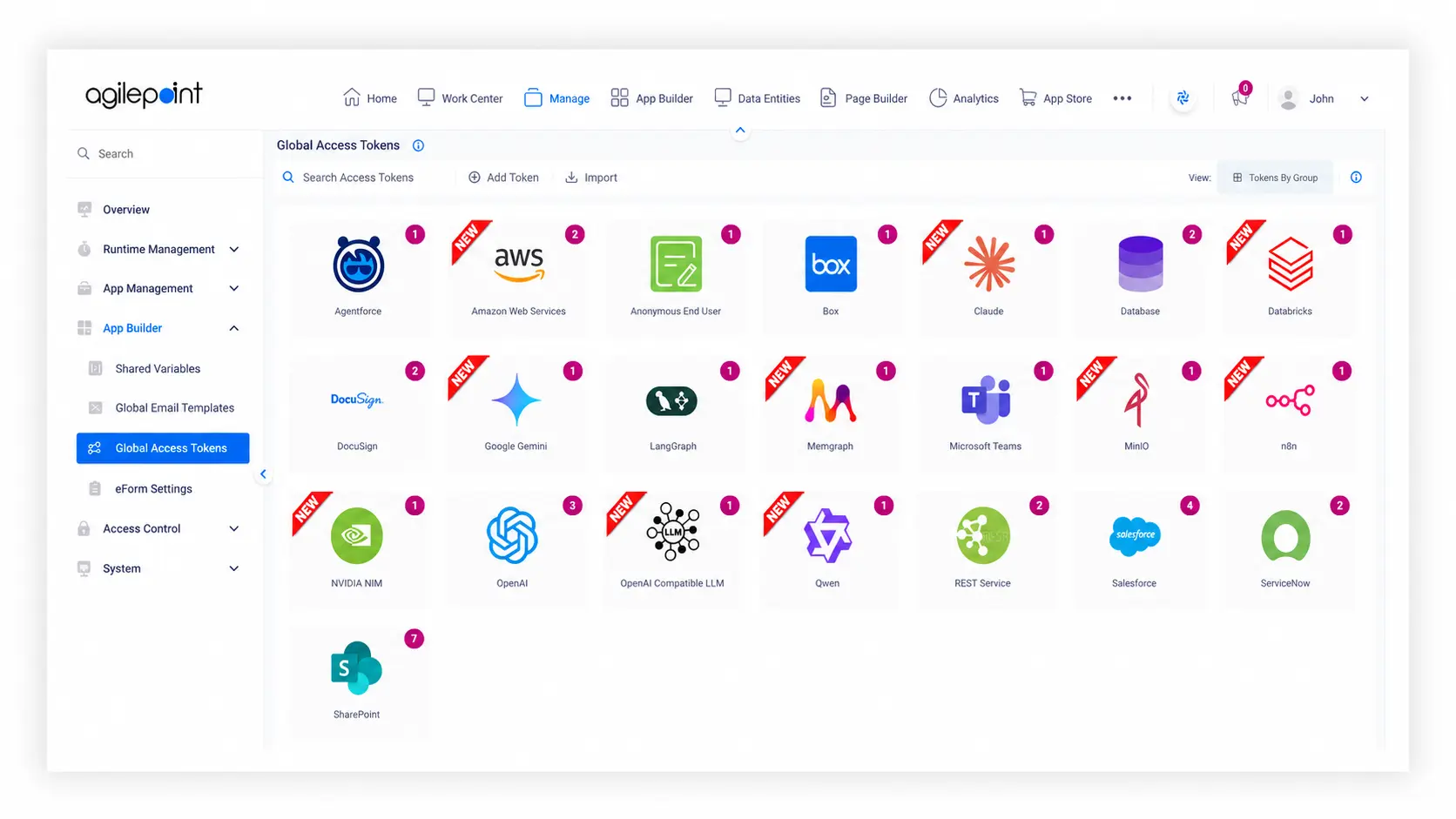
At the CxO Summit, we demonstrated how organizations could reuse more than 110 popular IT and automation systems already supported by AgilePoint to create applications that can support unpredictable and probabilistic use cases and gain strategic advantages by utilizing GenAI.
Therefore, the keys to accelerating AI operationalization are:
1) Ensuring the building of future enterprise applications, automation, and orchestrations on a new generation of probabilistic-ready application platforms to future-proof for AI and GenAI readiness; and
2) Enabling the coexistence of 'Software Factory' and 'AI Factory.'
Conclusion
What is an AI factory and how do you transition? The transition from a software factory to an AI-driven ecosystem can be achieved efficiently and represents a new industrial model for digital business.
By merging automation, data, and intelligence, organizations move beyond deterministic systems into adaptive, insight-led operations. AgilePoint’s architecture supports this evolution by bridging predictable workflows with dynamic, probabilistic applications.
Whether applied in finance, manufacturing, or online factory software environments, success begins with rethinking how systems learn, collaborate, and scale. The journey toward an AI factory starts with strategy, governance, and technology working together to deliver measurable, sustainable innovation.
.png)
.png)